
Foam Gaskets/Rubber Sponge

In applications where the integrity of acoustical foam must be preserved, perforated vinyl, metalized polyester film, aluminum or other substrates can be bonded to it.
Specifications
How to Choose the Right Foam
The densities, compressibility and deflections will affect foam function. Higher is better for sound absorption (12400FES vs. 10200FCU)
Thicker material is better for sound absorption especially for high frequency (not a lot of effect in low and mid frequency)
Choose a convoluted foam (12499FCO) when you have low and mid frequency and when you have space.
Polyurethane
General Specifications of Polyurethane:
- Excellent performance over broad temperature range
- Excellent compression set resistance
- Good chemical resistance
- Inherently flame retardant
- Lower bend recovery and compression resistance than Nylon
- Lower flex fatigue and abrasion resistance than Nylon
Polyethylene
General Specifications of Polyethylene:
- Very versatile and economical
- Good resistance to moisture
- Very flexible and resilient
- Good thermal insulation and noise absorption
- Superior UV resistance
PVC
General Specifications of PVC:
- Ability to seal for long periods
- Excellent shock absorption and vibration properties
- Superior UV stability (un-treated) compare to UV stabilized Polypropylene
- Wide service temperature range
- Flexible, resilient and easily compressible
Solid and Sponge Rubber Materials:
EPDM
General Specifications of EPDM:
- Excellent resistance to ozone, weather, water, steam and natural aging
- Very good flexibility at low temperatures
- Excellent product for outdoor applications
- Performs poorly when exposed to oil, fuel, and hydrocarbon solvents
Neoprene
General Specifications of Neoprene:
- Moderate resistance to oil and fuel
- Good resistance to flame and weather
- Very good resistance to abrasion, alkalis, acids
- Performs poorly when exposed to aromatic hydrocarbons, and offers limited flexibility at low temperatures
SBR
General Specifications of SBR:
- Excellent impact strength
- Very good resilience, tensile strength, abrasion resistance
- Very good flexibility at low temperatures
- Poor resistance to ozone and sunlight
- Very little resistance to oil, gasoline and hydrocarbon solvents
PVC
General Specifications of PVC:
- Good chemical resistance
- Very good recovery after compression set
- Excellent shock absorption properties
- Performs good when exposed to alcohol, oil, and fuel
- Performs poorly when exposed to degreasing hydrocarbon solvents
Natural Rubber
General Specifications of Natural Rubber:
- High tensile strength
- Superior resistance to tear and abrasion
- Excellent rebound elasticity (snap)
- Good flexibility at low temperatures
- Excellent adhesion to fabric and metal
- Poor resistance to heat, ozone, and sunlight
- Very little resistance to oil, gasoline, and hydrocarbon solvents
Usage
Related products


Looking for something else? Need something you don't see?
Ultrafab offers a wide range of products beyond those shown here. Contact us for more information.
Ultrafab Innovations
Leveraging cutting-edge technologies, Ultrafab is committed to driving innovation and operational excellence. These advancements enable us to automate complex tasks, enhance final product performance, and provide unparalleled efficiency across our processes
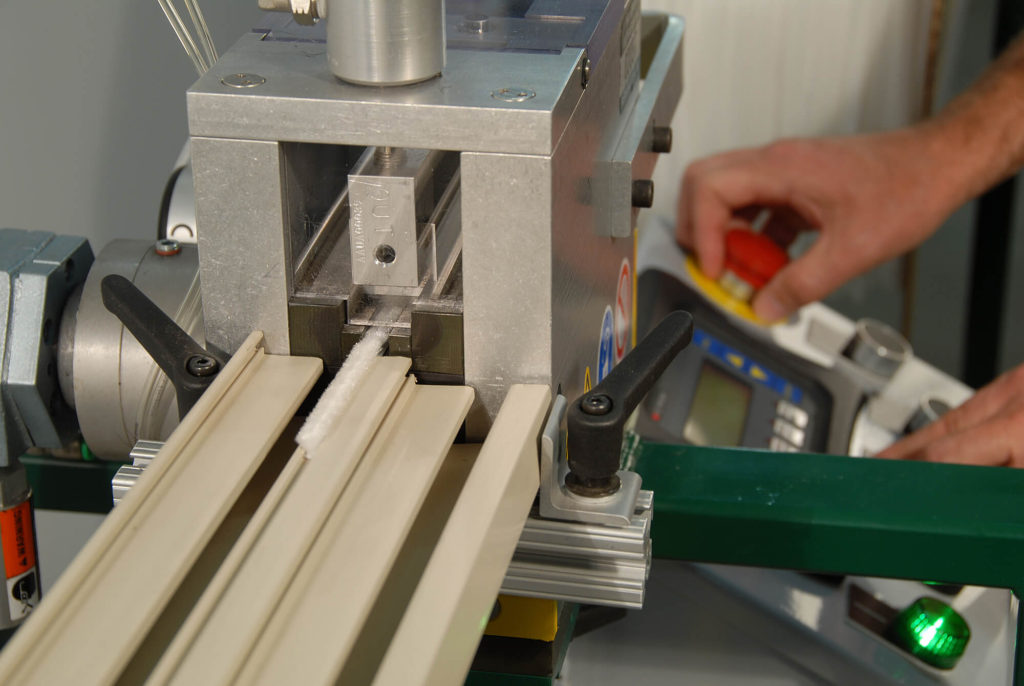
Ultrasonic Welding
Ultrafab uses ultrasonic welding to enhance the durability and performance of our products. This advanced process employs high-frequency vibrations to fuse materials together without adhesives or fasteners, ensuring precise and reliable bonds and preventing separation during fabrication or use. From weather seals to specialized components, ultrasonic welding enhances product integrity and durability. By leveraging this technology, Ultrafab achieves superior performance and consistency in our manufacturing process compared to our competitors.
3D Additive Manufacturing
By utilizing 3D printing, Ultrafab efficiently designs and produces precise components for our production equipment. Additionally, this technology allows for the rapid creation of intricate, quick-turn tooling and fixtures for custom prototypes. This results in the ability to provide fit and form samples at reduced costs and in a shorter timeframe.

Rapid Prototyping
Ultrafab’s rapid prototyping quickly develops and qualifies new product concepts, allowing for faster iteration and refinement. Ultrafab is home to an experienced onsite R&D team and model shop, equipped with routers, lasers, robotics, and automation. By employing advanced technologies, functional models are created to identify design flaws early, streamline production processes, and shorten development time.

Laser Cutting
Laser cutting offers exceptional precision and customization, allowing for the creation of intricate shapes and tailored designs to meet specific needs. This method ensures clean, accurate cuts across various materials, making it ideal for producing components with unique specifications.
Dedicated Design Services
There is no standard sealing system that works for all applications. Ultrafab’s specialty products division provides innovative and timely solutions for a broad variety of applications. We have onsite engineers and product development staff to help determine exact solution for an application. Ultrafab also carries ready-to-ship samples of standard product offerings to help guide decision making. Contact us today.


Find the perfect match to Ultrafab’s seals with Roto’s comprehensive line of window & door hardware. Find out more.